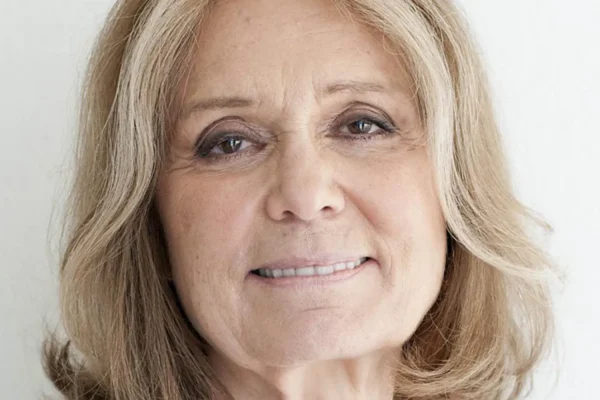
Maryland NOW joins feminists across the country and around the world in mourning the death of Gloria Steinem, whose writing, organizing and activism helped transform the lives of generations of women.
For more than six decades, Gloria helped change not only what Americans thought about women’s equality, but what we were willing to talk about at all.
As a young journalist, she confronted a profession in which women were routinely relegated to “women’s pages” and denied serious assignments. Her groundbreaking reporting exposed the exploitation of women working in Playboy Clubs and challenged the narrow choices society imposed on women between family, independence and professional ambition.
But journalism was only one part of her work.
Gloria helped build the institutions that turned the modern women’s movement into lasting political and cultural power. She co-founded Ms. magazine, the National Women’s Political Caucus, the Women’s Action Alliance and the Ms. Foundation for Women, and spent decades organizing for reproductive freedom, the Equal Rights Amendment, economic equality, an end to violence against women and women’s full participation in political life.
She also understood that feminism could never belong to one woman, one generation or one group of women.
Although the media often tried to make Gloria the singular face of the women’s movement, she repeatedly directed attention toward the women who organized alongside her and those whose work had too often been erased from its history. She credited women including Dorothy Pitman Hughes, Florynce Kennedy, Fannie Lou Hamer, Pauli Murray and Shirley Chisholm with teaching and inspiring her.
Gloria understood that movements are built collectively and passed from generation to generation.
That may be among the most important parts of her legacy.
The world Gloria entered as a young woman was profoundly different from the one she leaves behind. Women who were once excluded from institutions of power now lead them. Issues once dismissed as private matters or simply “the way things are” became matters of public policy, civil rights and law.
That transformation did not happen naturally. Women organized for it.
And the work remains unfinished.
The Equal Rights Amendment Gloria spent decades championing remains at the center of our work. Reproductive freedom is again being contested across the country. Women continue to confront violence, economic inequality and discrimination. LGBTQIA+ people face renewed attacks on their rights and dignity. Women and girls still live with inequalities that earlier generations of feminists fought to expose.
Gloria once rejected the idea that there was a single feminist torch that she would someday hand to a successor. Her vision was much bigger: one torch lighting another, and another, until there was more light everywhere.
Maryland NOW is part of that light.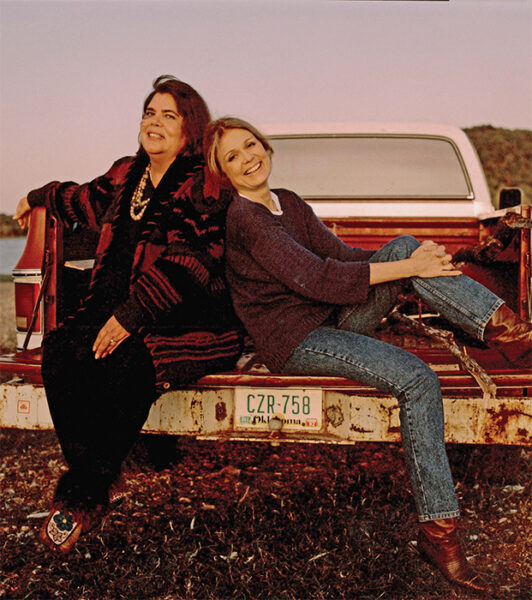
Our members span generations. Some encountered Gloria Steinem and the women’s movement as these battles were first being fought. Others grew up in a world already transformed by those victories and discovered, sometimes painfully, how much of that progress could still be taken away.
So rather than simply recount Gloria’s remarkable life, we wanted to remember what she meant to us. Some personal reflections –
Barbara Hays, President, Maryland NOW
My involvement in the women’s movement and in NOW in the late 1970s and early 1980s came mostly through work for ratification of the ERA. Political science and constitutional law are in my DNA and are the lens through which I understood both the history of the women’s movement and the need for the new energy that was emerging around the country. That said, I was always grateful when it was Gloria who was testifying before a Congressional Committee because I knew her testimony would be accurate, on point, and quite possibly would win over holdouts.
I was drawn to Gloria’s writing – the two books I have read and re-read over the years are “The Truth Will Set You Free, But First It Will Piss You Off,” and “Outrageous Acts and Everyday Rebellions.” Both titles drew me in as a grassroots organizer. I wasn’t so interested in the philosopical underpinnings of feminism as I was where we were now and what we needed to do to move forward. I accomplished nothing the day Ms. Magazine arrived in my mailbox.
The day after Gloria died, Alyssa Milano wrote on Substack: “Gloria Steinem Build the Rooms We are Still Standing In.” Milano reminds us of something else Gloria said which we must remember above everything: “Imagine we are linked, not ranked.” It isn’t just an organizing principle – it’s a mandate we have to remember as leaders.
(https://alyssajmilano.substack.com/p/gloria-steinem-built-the-rooms-we)
Crystal Lopez Peters, Action Vice President and MD NOW PAC Administrator, Maryland NOW
I am too young to remember Gloria Steinem at the height of the women’s movement. I knew who she was, and I had watched documentaries about her, but my relationship with her was different from that of women who experienced those years firsthand.
One of my favorite Gloria connections came to me without my even knowing it was Gloria.
At the beginning of N.E.R.D.’s “Lemon,” featuring Rihanna, Pharrell says, “The truth will set you free, but first it will piss you off.” I loved that line. It was only later that I learned those were Gloria Steinem’s words.
There is something about that that I find incredibly beautiful.
Her words had traveled from the women’s movement into music, through artists I loved, and reached me without requiring me to know where they started. It reminds me of Janet Jackson’s Rhythm Nation and the idea that people can be connected by a common purpose even when we are scattered across different places, generations, communities and forms of expression.
We don’t all encounter the movement in the same place. Some of us find it in an organization. Some in a book. Some in politics or protest. Some of us hear it in a song.
But we find each other.
I love that artists recognize these connections. I love that they carry the ideas forward and share them with people who might encounter them somewhere completely different. And I love that I got to experience Gloria that way before I even knew I was experiencing Gloria.
Maybe that is what it means to leave a legacy. Your ideas become bigger than you. They keep moving after they leave your hands.
That was Gloria.
________________________________